Manaslu Circuit Trek
The Manaslu Circuit Trek is one of Nepal's finest and most rewarding long-distance treks, circling the world's eighth-highest mountain through remote Himalayan villages, Buddhist monasteries, and across the dramatic Larkya La Pass at 5,167m. This guide covers the 14-day itinerary, permit requirements, costs, difficulty, and packing for 2026.
This guide is maintained by Navigate Globe, a Kathmandu-based trekking agency licensed by the Nepal Tourism Board and organizing Manaslu treks since 2009. All permit fees and regulations are regularly verified against official Nepal government sources.
Why the Manaslu Circuit Trek Belongs on Your Nepal List
The Manaslu Circuit Trek offers something Everest and Annapurna cannot, genuine remoteness combined with full infrastructure. You get high mountains, deep culture, and teahouse comfort without the crowds that now define Nepal's two most famous routes.
What Makes It Different from Everest and Annapurna
Manaslu sits inside a restricted area, which means permit requirements limit daily trekker numbers. The result is a trail that feels wild and authentic even in peak season, with fewer agencies and no teahouse queues at altitude.
How Remote Is It Really: Crowds vs Solitude
You will share the trail with other trekkers, particularly at Samagaun and on Larkya La crossing day. Below Namrung and above Samdo, trail traffic is noticeably lighter than anything on the EBC or Annapurna Circuit.
Who Should Attempt the Manaslu Circuit Trek
Trekkers who have completed at least one high-altitude Nepal trek before
Anyone who wants Himalayan scale without Everest region prices and crowds
Travelers with 14 to 18 days available
People curious about Tibetan-influenced Buddhist culture in a living, working context
Trek at a Glance
The Manaslu Circuit Trek takes 14 to 18 days, reaches a maximum altitude of 5,167m, and is rated challenging. Here is everything at a glance before you plan.
Detail | Information |
Duration | 14 days (standard) / 18 days (extended itinerary) |
Maximum Altitude | 5,167m: Larkya La Pass |
Difficulty | Challenging |
Start Point | Soti Khola (road access from Kathmandu) |
End Point | Dharapani (connects to Annapurna Circuit road) |
Best Season | March–May and September–November |
Permits Required | MCAP + RAP + ACAP + Chumnubri fee |
Guide Required | Yes, mandatory by Nepal law |
Minimum Fitness | Good cardiovascular fitness, prior trekking experience |
Distance | Approximately 177km (on foot) |
Manaslu Circuit Trek: Day-by-Day Itinerary (14 Days)
The Manaslu Circuit Trek follows a logical anti-clockwise loop from Soti Khola, gaining altitude gradually before the big Larkya La crossing on Day 11. Every stage below includes altitude,
Day | Route | Overnight |
1 | Arrive Kathmandu | Kathmandu(1400m) |
2 | Drive to Soti Khola | Soti Khola(710m) |
3 | Trek to Machha Khola | Machha Khola(870m) |
4 | Trek to Jagat | Jagat(1,410m) |
5 | Trek to Deng | Deng(1,860m) |
6 | Trek to Namrung | Namrung(2,660m) |
7 | Trek to Samagaun | Samagaun(3,530m) |
8 | Acclimatisation | Samagaun |
9 | Trek to Samdo | Samdo(3,860m) |
10 | Trek to Dharamsala | Dharamsala(4,460m) |
11 | Cross Larkya La(5,167m) to Bimthang | Bimthang(3,720m) |
12 | Trek to Tilije | Tilije(2,300m) |
13 | Trek to Dharapani | Dharapani(1,960m) |
14 | Drive to Kathmandu | Kathmandu(1,400m) |
This is the standard 14-day Manaslu Circuit Trek itinerary followed by most trekkers. It balances daily walking distances with proper acclimatisation before crossing Larkya La Pass. For detailed daily walking times, elevation gain, accommodation, and inclusions, see our 14-Day Manaslu Circuit Trek package.
Manaslu Circuit Trek Cost 2026: Full Breakdown
The Manaslu Circuit Trek costs between $1,100 and $2,500 depending on your travel style, group size, and whether you book independently or through an agency. Here is a full breakdown so there are no surprises.
Total Cost Summary: Budget vs Mid-Range vs Full Service
Item | Budget | Mid-Range | Full Service |
Permits (all four) | $215 | $215 | $215 |
Guide (14 days) | $350 | $490 | Included |
Porter (14 days) | $280 | $350 | Included |
Lodge + food (14 days) | $350 | $560 | $770 |
Transport (both ways) | $30 | $80 | Included |
Insurance | $100 | $120 | $150 |
Gear rental | $60 | $80 | Included |
Tips + personal | $150 | $200 | $250 |
Total | ~$1,520/1675 | ~$2,095 | ~$2,400+ |
Note: These figures are starting estimates for a 14-day trek. For a complete itemised breakdown including permit seasonality, hidden costs, and side-trip options, see our full Manaslu Circuit Trek Cost 2026 guide.
Permit Costs: Exact Prices for Every Permit
All four permits are non-negotiable and must be obtained before the trek starts. For the Manaslu Circuit Trek Permit 2026, total cost is $215–$225 per person for a standard 14-day trek in autumn (or $163–$170 in off-peak seasons).
Source: Nepal Tourism Board, 2026
Guide and Porter Costs Per Day
Licensed guides charge $25 to $35 per day. Porters charge $20 to $25 per day and carry a maximum of 20kg. Both require you to cover their food, accommodation, and insurance, factor an additional $10 to $15 per day per staff member.
Source: TAAN porter welfare guidelines
Lodge and Food Costs: What to Expect at Each Altitude
Below Jagat expect to pay $25 to $30 per day for a room and three meals. Above Samagaun prices rise to $35 to $50 per day as supply logistics become more complex. Larkya Phedi (high camp) charges premium rates for basic facilities.
Transport: Kathmandu to Soti Khola and Back
Shared jeep: $15 to $20 per person one way, 7 to 8 hours
Private jeep: $80 to $120 one way, same journey time but far more comfortable
Return from Dharapani to Kathmandu is similar pricing via Besisahar
Agency Fee: What Navigate Globe Includes
Navigate Globe's Manaslu packages include all permits, a licensed English-speaking guide, a porter, all teahouse accommodation, breakfast and dinner daily, airport transfers, and emergency communication equipment.
Hidden Costs Most Trekkers Forget
Travel insurance with helicopter evacuation cover is mandatory, budget $80 to $150
Personal snacks and drinks beyond included meals
Charging fees at teahouses, $1 to $3 per device above 3,000m
Tips for guide and porter, standard is $10 to $15 per day per person at the end
Gear purchase or rental in Kathmandu if you arrive without equipment
Manaslu vs EBC vs Annapurna: Which Trek Costs More?
Manaslu is the most expensive of the three due to restricted area permit costs. EBC is slightly cheaper on permits but Lukla flights add $200 to $350 return. Annapurna Circuit is the cheapest overall. If the budget is tight, Annapurna is the value option if experience and remoteness matter more, Manaslu justifies the premium.
For a full cost breakdown including hidden fees see our Manaslu Cost & Permits guide
Permits Required for the Manaslu Circuit Trek
The Manaslu Circuit Trek requires four separate permits. Missing any one of them will result in being turned back at a checkpoint. Your agency handles the paperwork but you need to understand what you are paying for.
Manaslu Conservation Area Permit (MCAP) — $23-25
Issued by the Department of National Parks and Wildlife Conservation. Valid for the duration of your trek inside the conservation area. Obtained in Kathmandu at the Nepal Tourism Board office.
Restricted Area Permit (RAP) — $100 Per Week
This is the permit that limits trekker numbers and keeps Manaslu from becoming another crowded route. The minimum group size rule for the RAP was removed on 22 March 2026, so solo trekkers can now obtain the permit. However, a licensed guide and registered agency are still mandatory for this restricted route. Cost is $100 per week for the first four weeks, $150 per week after that.
Source:Department of Immigration, March 2026
Annapurna Conservation Area Permit (ACAP) — $30
Required because the standard 14-day Manaslu Circuit exits via Dharapani, which sits inside the Annapurna Conservation Area. Even if you spend only one night in the ACAP zone, the permit is required.
Chumnubri Rural Municipality fee — $8(cash only)
A local municipal fee collected at the entry checkpoint. This fee must be paid in cash — card payments are not accepted.
Where to Get Your Permits and When to Apply
All permits are obtained in Kathmandu before the trek begins, you cannot get them en route. Apply at the Nepal Tourism Board office on the day before your departure or earlier. Your agency will handle all applications if you book through Navigate Globe.
Can I Get Permits Myself or Does My Agency Handle It?
You can apply for permits yourself at the Nepal Tourism Board office. However, since a licensed guide is mandatory anyway, most trekkers allow their agency to handle all paperwork together, it saves time and reduces risk of errors.
Read our full permit guide: Manaslu Circuit Trek Permit 2026
Larkya La Pass: The Heart of the Manaslu Circuit Trek
Larkya La Pass at 5,167m is the defining moment of the Manaslu Circuit Trek. Everything in the first nine days of the trek, the gradual altitude gain, the acclimatisation day, the early night at high camp is preparation for this single crossing.
Altitude and What to Expect at 5,167m
At 5,167m you are well above comfortable oxygen levels. Breathing feels laboured, pace slows dramatically, and cold is intense even in autumn. Expect temperatures of minus 10 to minus 20 degrees Celsius at the summit of the pass.
What Time Do You Leave Camp to Cross?
Standard departure from Larkya Phedi (high camp at 4,460m) is between 4am and 5am. Leaving early ensures you reach the pass before afternoon winds arrive and gives you maximum daylight for the long descent to Bimthang.
How Long Does the Crossing Take?
The ascent from high camp to the pass takes 3 to 4 hours. The descent from the pass to Bimthang takes a further 3 to 4 hours. Total walking time on crossing day is 7 to 9 hours including breaks, the longest single day of the trek.
What Happens If the Pass Is Closed by Snow?
Heavy snowfall can close Larkya La for 1 to 3 days, most commonly in November, December, and March. Your guide will make the go/no-go call based on conditions. This is why Day 14 is built as a buffer to absorb unexpected pass closures without missing flights.
Physical Demands of Crossing Day: Honest Assessment
This is a genuinely hard day even for fit trekkers. The altitude, the early start, the cold, and the length combine to test physical and mental reserves. Trekkers who struggle most are those who underestimated the acclimatisation days or skipped the base camp hike on Day 7.
How Difficult Is the Manaslu Circuit Trek?
The Manaslu Circuit Trek is rated challenging and harder than Annapurna Base Camp and comparable to Everest Base Camp, with the Larkya La Pass crossing adding a level of commitment that neither Poon Hill nor classic ABC can match.
Overall Difficulty Rating and Why
The combination of duration (14 days), maximum altitude (5,167m), restricted facilities in the upper section, and the all-or-nothing commitment of the Larkya La crossing puts Manaslu firmly in the challenging category. It is not technical, no ropes or climbing gear required but it demands sustained fitness and good altitude management.
Manaslu vs Everest Base Camp Trek: Which Is Harder?
Manaslu is marginally harder than a standard EBC trek. EBC reaches 5,364m but has better teahouse facilities throughout and no single day as demanding as the Larkya La crossing. Manaslu's remoteness means rescue access is slower, which raises the stakes for altitude sickness.
Manaslu vs Annapurna Circuit: Which Is Harder?
Manaslu is harder than the Annapurna Circuit. Thorong La Pass (5,416m) is slightly higher than Larkya La, but the Annapurna Circuit has better infrastructure, more route flexibility, and easier bail-out options if you struggle at altitude. Manaslu demands more commitment once you are inside the restricted area.
Altitude Profile: Where Altitude Sickness Risk Is Highest
Low risk below Namrung (under 2,700m)
Moderate risk Namrung to Samagaun (2,700m to 3,530m)
High risk Samagaun to Samdo (3,530m to 3,875m)
Very high risk Samdo to Larkya La (3,865m to 5,167m)
The acclimatisation day at Samagaun is non-negotiable, it directly determines your performance on Day 10.
Fitness Level Required: How to Know If You Are Ready
You should be able to walk 6 to 8 hours continuously over uneven terrain at low altitude before attempting Manaslu. Regular cardio training for 8 to 12 weeks before departure is strongly recommended. Prior experience above 3,500m is a significant advantage.
Who Should NOT Attempt This Trek
First-time trekkers with no high-altitude experience
Anyone with heart or respiratory conditions not cleared by a doctor
Trekkers unwilling to hire a licensed guide
Anyone with fewer than 12 days available
Best Time for the Manaslu Circuit Trek: Month by Month
The best time for the Manaslu Circuit Trek is autumn, specifically October and early November. Spring is the second best window. Both seasons offer stable weather, clear skies, and reliable Larkya La Pass conditions.
Spring: March, April, May (Peak Season)
March brings fresh snow on the pass and occasional trail closures early in the month. April is the most reliable spring month, warm days, cold nights, and exceptional mountain visibility. May becomes increasingly warm below 3,000m and pre-monsoon clouds build in the afternoons, reducing summit views.
Autumn: September, October, November (Best Overall)
September trails can be muddy from late monsoon rains but the mountains are green and dramatic. October is widely considered the single best month for Manaslu with clear skies, stable temperatures, perfect Larkya La conditions. Early November is excellent. Late November brings increasing cold and early snow risk on the pass.
Winter: December, January, February (Possible But Cold)
The trek can be completed in winter by experienced trekkers with appropriate gear. Larkya La may be impassable with heavy snowfall. Teahouses above Samagaun often close in January and February, confirm availability before booking a winter departure.
Monsoon: June, July, August (Why to Avoid)
Heavy rainfall makes lower trail sections muddy and landslide-prone. Leeches are prevalent below 2,500m. Mountain views are largely hidden by cloud. The Manaslu region receives heavy monsoon rain from the south so this is not a trek to attempt in the monsoon season.
October vs November: Which Month Is Better?
October wins for most trekkers, warmer temperatures, post-monsoon clarity, and peak trail conditions throughout. November is ideal for those who prefer fewer fellow trekkers and can tolerate colder nights at high camp. If in doubt, target the first two weeks of October.
Manaslu Circuit Trek Route and Map
The Manaslu Circuit Trek follows a complete loop around Mount Manaslu in the Gorkha district of northwest Nepal, starting and ending at road access points accessible from Kathmandu.
Route Overview: Soti Khola to Dharapani Loop
The route begins at Soti Khola (700m), follows the Budhi Gandaki river valley north through progressively higher terrain, circles the Manaslu massif via Samagaun and Samdo, crosses Larkya La Pass (5,167m), and descends into the Marsyangdi valley, exiting at Dharapani on the Annapurna Circuit road.
Key Villages Along the Route
Jagat (1,340m): first permit checkpoint, last reliable mobile signal for several days
Namrung (2,630m): beginning of Tibetan Buddhist cultural zone
Samagaun (3,530m): largest village, acclimatisation base, optional Manaslu Base Camp hike
Samdo (3,875m): last significant village before the pass
Larkya Phedi (4,460m): high camp, very basic facilities
Bimthang (3,590m): first village after the pass, green valley and strong mountain views
Where the Tsum Valley Branch Splits Off
The Tsum Valley branch splits from the main Manaslu Circuit at Lokpa, north of Jagat, approximately on Day 3 of the standard itinerary. Adding Tsum Valley requires an additional 7 to 10 days and a separate Tsum Valley permit, the two routes rejoin at Samagaun.
Elevation Profile: Visual Description of the Route Shape
The elevation profile rises steadily from 700m to 3,530m across the first six days, plateaus with the acclimatisation day, makes a shorter push to 4,460m (high camp), spikes sharply to 5,167m on Day 10, then drops quickly back to under 2,000m by Day 12. The shape is a long ramp up followed by a steep drop, not a series of ups and downs.
Short Manaslu Circuit Trek: 10 and 12 Day Options
A shorter version of the Manaslu Circuit Trek is possible and increasingly popular among trekkers with limited time. The key question is whether the cuts compromise the experience and the honest answer depends on your priorities.
What a 10-Day Manaslu Trek Looks Like
A 10-day itinerary compresses the lower valley sections and removes the Manaslu Base Camp acclimatisation hike. You still cross Larkya La Pass and complete the full circuit but the pace is harder and altitude acclimatisation is less generous, increasing altitude sickness risk.
What You Skip on the Short Version
The acclimatisation hike to Manaslu Base Camp on Day 7
The gentler lower valley days that allow legs and lungs to adjust gradually
Buffer time if the pass is closed by weather
Is the Short Version Worth It?
Yes, for experienced high-altitude trekkers who have been above 4,000m before, a 10 to 12 day version is manageable and still delivers the essential Manaslu experience. For anyone attempting Manaslu as their first high-altitude trek, the standard 14-day itinerary is strongly recommended.
Who Should Choose the Short Manaslu Circuit
Experienced trekkers returning to Nepal who want Manaslu without the full two-week commitment
Those who have already trekked EBC or Annapurna Circuit and know how their body handles altitude
Small private groups who can move at their own pace with a flexible guide
Manaslu Circuit Trek + Tsum Valley: Should You Combine Them?
Adding Tsum Valley to the Manaslu Circuit Trek creates one of Nepal's most complete and culturally rich trekking experiences. It is not for everyone but for the right trekker, it is the difference between a great trek and an unforgettable one.
What Is Tsum Valley and Why It Matters
Tsum Valley is a hidden trans-Himalayan valley north of the main Manaslu Circuit, inhabited by the Tsumba people, a Tibetan Buddhist community that has maintained its culture largely unchanged for centuries. Monasteries, sacred sites, and a way of life with almost no outside influence make it unlike anywhere else in Nepal.
How Many Extra Days Does Tsum Valley Add?
Adding the full Tsum Valley loop adds 7 to 10 days to the standard Manaslu Circuit, bringing the total trek duration to 21 to 24 days. A shorter Tsum Valley extension visiting the lower valley villages adds 4 to 5 days.
Extra Permits and Cost for Tsum Valley
A separate Tsum Valley restricted area permit is required in addition to all standard Manaslu permits. The current cost is $40 per week. The same two-person minimum group size rule applies. Budget an additional $300 to $500 for the extended days including permit, lodge, and food costs.
Who Should Add Tsum Valley to Their Trek
Trekkers with 20 or more days available
Anyone with a strong interest in Tibetan Buddhist culture and remote village life
Returning Nepal trekkers who have already done EBC and Annapurna and want something genuinely different
Those willing to accept more basic teahouse standards in exchange for extraordinary cultural access
Can I Do the Manaslu Circuit Trek Without a Guide?
No. The Manaslu Circuit Trek is a restricted area trek and a licensed guide is mandatory under Nepal government regulations. This is not a recommendation, it is a legal requirement enforced at permit checkpoints throughout the route.
Why a Guide Is Legally Required
Nepal's government classified the Manaslu region as a restricted area to protect both the environment and the local communities. The guide requirement is part of that protection framework. At every checkpoint on the trail, your guide's license details are recorded alongside your permits, no guide means no entry beyond Jagat.
What Happens If You Try to Trek Without One
You will be turned back at the first restricted area checkpoint at Jagat. Your RAP permit will be marked invalid for independent travel and you will lose the permit fee with no refund. There is no unofficial route around the checkpoints.
How to Choose the Right Guide
Confirm they hold a current Nepal Tourism Board trekking guide license
Ask specifically about Manaslu experience, how many times they have crossed Larkya La
Ask how they handle altitude sickness emergencies, they should carry a pulse oximeter and know evacuation procedure
Avoid guides who cannot clearly explain the permit requirements, it signals inexperience in restricted area trekking
What to Pack for the Manaslu Circuit Trek
Packing for the Manaslu Circuit Trek requires layering for 700m to 5,167m, here is what you need at each altitude zone. Pack for temperatures from 35°C at the lowland trailhead to -20°C at the Larkya La summit.
Clothing: Layering for 700m to 5,167m
Base layer: thermal top and bottom (merino wool preferred)
Mid layer: fleece or down jacket
Outer layer: waterproof and windproof shell jacket and trousers
Insulated down jacket: essential above 3,500m
Trekking trousers: two pairs minimum
Warm hat, balaclava, gloves, and neck gaiter for Larkya La day
Lightweight trail runners or trekking boots, full ankle support above Namrung
Gear: What Is Essential vs What You Can Rent in Kathmandu
Essential to bring: broken-in boots, a well-fitted pack (50 to 65 litres), trekking poles, headlamp with spare batteries, and a sleeping bag rated to minus 15 degrees Celsius.
Can rent or buy cheaply in Kathmandu's Thamel district: sleeping bag, trekking poles, down jacket, waterproof jacket, and gaiters.
Medication: Altitude Sickness Prevention
Diamox (Acetazolamide): consult your doctor before departing, commonly prescribed for altitude sickness prevention above 3,000m
Ibuprofen or paracetamol for headaches
Oral rehydration salts
Blister treatment and basic first aid kit
Your guide carries a pulse oximeter, check your SpO2 reading each morning above Samagaun
Documents: What to Carry on the Trail
Carry physical copies of all four permits, your passport, your travel insurance documents with the emergency helicopter evacuation number highlighted, and your agency's emergency contact. Checkpoint officials will inspect your permits at Jagat, Namrung, and Samagaun, keep them accessible, not buried in your pack.
Accommodation on the Manaslu Circuit Trek
Accommodation on the Manaslu Circuit Trek is entirely teahouse-based on the standard 14-day route. Standards vary significantly between the lower and upper sections, knowing what to expect prevents disappointment.
Teahouse Standards: What to Expect
Below Jagat and around Dharapani, teahouses are comfortable with attached bathrooms, proper beds, and varied menus. Above Samagaun and at Larkya Phedi, facilities are basic, shared squat toilets, thin mattresses, minimal heat, and limited menu options. Teahouse blankets above Samagaon are insufficient, bring a sleeping bag rated to -15°C.
Which Sections Have Better Lodges
Samagaun has the best teahouses on the route, multiple options, electricity, solar hot showers, and reasonable food variety. Samdo is a step down but still comfortable. Larkya Phedi (high camp) is the most basic, functional but nothing more.
Electricity, Wi-Fi, and Charging on the Trail
Charging available at most teahouses up to Samagaun, expect to pay $1 to $3 per device
Solar power is unreliable above Samdo, carry a power bank with full charge from Samagaun
Wi-Fi is available at Samagaun teahouses (slow, intermittent, paid)
Mobile signal disappears above Jagat for most Nepal networks and returns at Dharapani
Camping vs Teahouse: Do You Have a Choice?
Camping on the Manaslu Circuit is logistically complex and significantly more expensive than teahouses, agencies universally recommend the teahouse route.
Getting to the Start: Kathmandu to Soti Khola
The only way to reach the Manaslu Circuit Trek trailhead is a 7–8 hours overland drive from Kathmandu to Soti Khola; there is no flight option. Planning this section correctly affects your first day's energy levels.
Jeep vs Bus: Time, Cost and Comfort
A private jeep takes 7 to 8 hours from Kathmandu to Soti Khola and costs $80 to $120 one way for the vehicle. A shared jeep or local bus takes the same time but is significantly less comfortable on rough road sections, budget $15 to $20 per person. For groups of three or more, a private jeep divided by headcount often costs the same as shared transport.
Road Conditions and Journey Time
The road from Kathmandu to Arughat is tarmac and in reasonable condition. The section from Arughat to Soti Khola is unsealed and rough, particularly after the monsoon season. Journey times can extend by 1 to 2 hours in wet conditions or if road repair work is underway. Depart Kathmandu by 6am to reach Soti Khola before dark.
Where to Stay in Kathmandu Before the Trek
Stay in Thamel, it is where all permit offices, gear rental shops, and trekking agencies are concentrated. Allow at least one full day in Kathmandu before departure for permit collection, final gear checks, briefings with your guide, and permit office visits. Navigate Globe handles permit collection and guide briefings as part of all Manaslu packages.
Choose Your Manaslu Package with Navigate Globe
Navigate Globe offers two Manaslu packages: a 14-day circuit from $2,000 and an 18-day extended version from $2,500.
Manaslu Circuit Trek: 14 Days
The complete Manaslu Circuit from Soti Khola to Dharapani via Larkya La Pass. Includes all permits, licensed English-speaking guide, porter (1 per 2 trekkers), all teahouse accommodation, breakfast and dinner daily, Kathmandu airport transfers, and emergency communication equipment.
View 14-Day Manaslu Package
Manaslu Circuit Trek: 18 Days
The same complete circuit with additional days built in for a more comfortable pace, extra acclimatisation time at Samagaun, and flexibility to explore side trails. Recommended for first-time Manaslu trekkers or anyone who wants to move without time pressure.
View 18-Day Manaslu Package
Use this guide with
Compare Manaslu Circuit Trek - 14 Days
Review the itinerary, inclusions, cost notes, and booking options for the closest matching package.
Manaslu Circuit Trek Cost and Permits 2026: Budget, Route & Planning Guide
Continue into the next planning question in this topic cluster.
Everest Region destination guide
Check destination details, route context, and nearby trip options.
Nepal travel FAQ
Verify practical details around visas, safety, packing, payment, and trip preparation.
Related packages
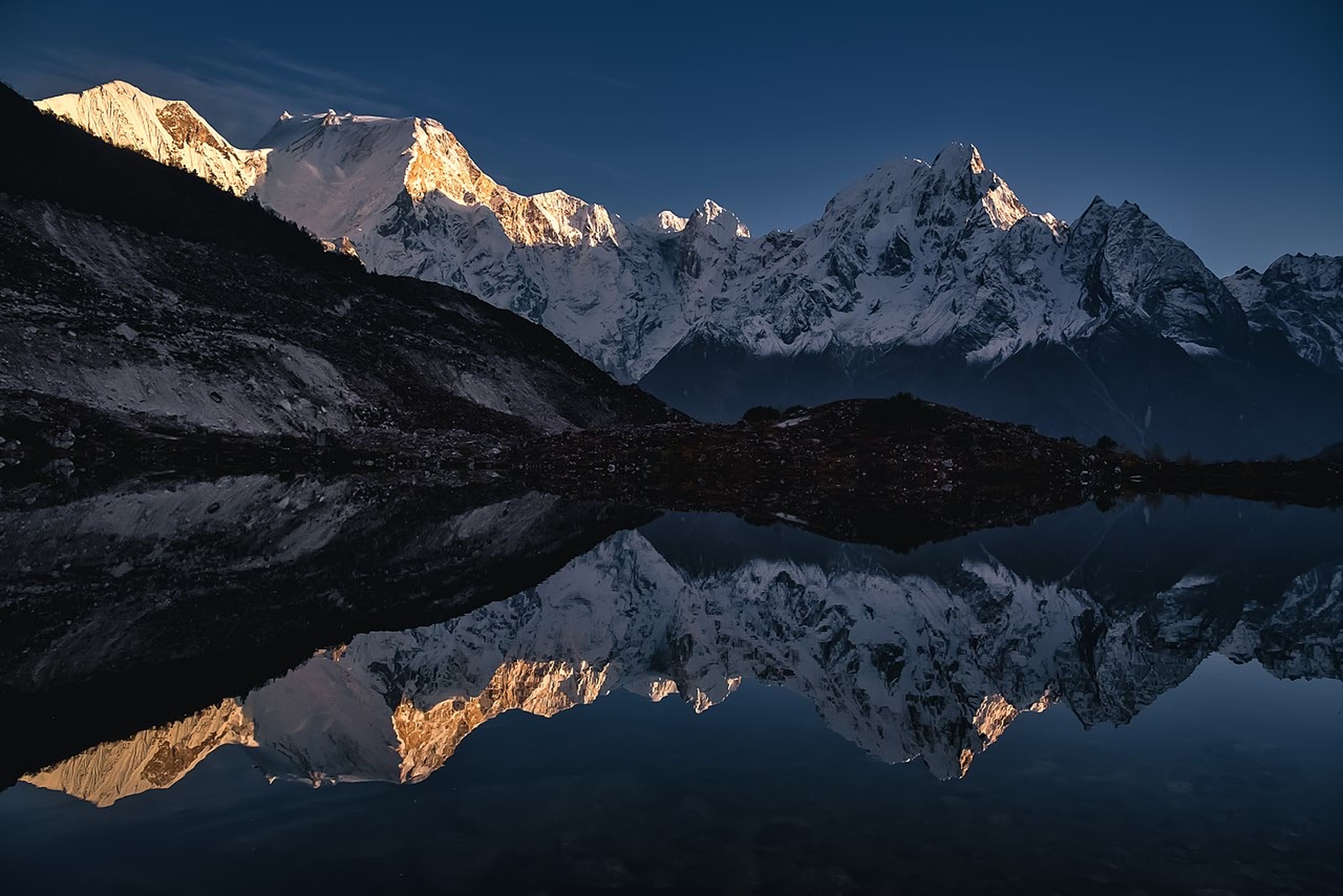
Manaslu Circuit Trek - 14 Days
Circle the world's eighth-highest peak on this remote adventure, crossing the spectacular Larkya La Pass at 5,167m.
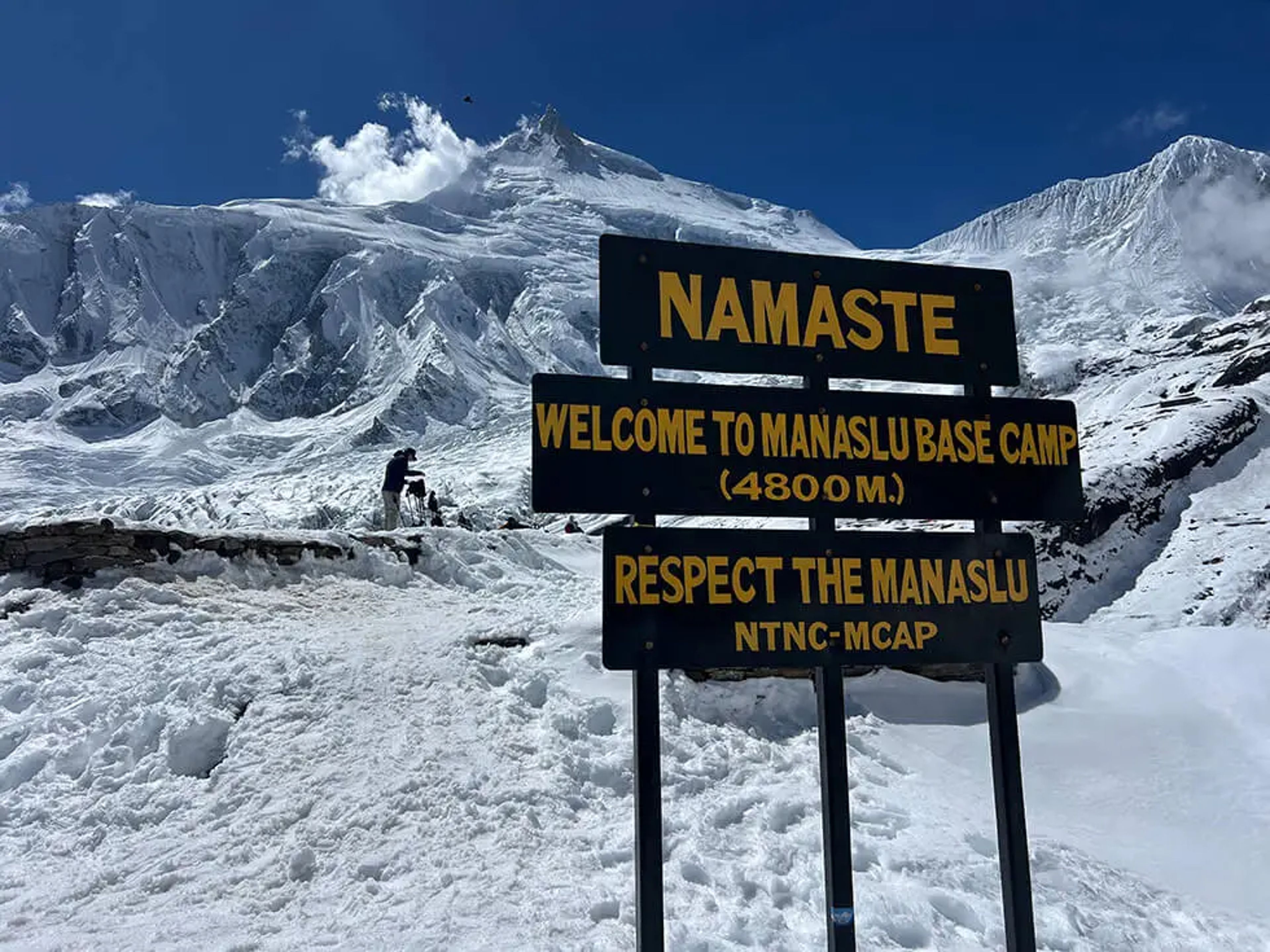
Manaslu Trek - 18 Days
Journey around Nepal's eighth highest peak through pristine wilderness, crossing the dramatic Larkya La Pass at 5,235m in this authentic Himalayan adventure.
Frequently Asked Questions About the Manaslu Circuit Trek
How hard is the Manaslu Circuit Trek?
Do I need a guide for the Manaslu Circuit Trek?
What permits do I need?
How much does the Manaslu Circuit Trek cost in 2026?
What is the best time for the Manaslu Circuit Trek?
Can I do a short Manaslu Circuit Trek?
What is the maximum altitude on the Manaslu Circuit Trek?
How is Manaslu different from Annapurna Circuit?
Can I do the Manaslu Circuit Trek without a guide?
Is Manaslu harder than Everest Base Camp?
What is Larkya La Pass and how difficult is the crossing?
Can I combine Manaslu Circuit with Tsum Valley?
Sources and official references
We use official and primary sources where possible. Travel rules, access, and operating conditions can change, so confirm requirements before departure.
Department of Immigration – Trekking Route and Permit Fee
Official Manaslu Restricted Area Permit (RAP) fees by season (Sep–Nov vs Dec–Aug)
Last checked Mar 6, 2026
NTNC Manaslu Conservation Area Project (MCAP)
That MCAP is the official conservation-area permit for this region
Last checked Mar 6, 2026
Nepal Tourism Board – Trekking Permit
That restricted-area trekking permits (including Manaslu) must be obtained from the Department of Immigration
Last checked Mar 6, 2026
NTNC ePermit Portal (MCAP/ACAP applications)
That MCAP and ACAP can be applied for via an official online ePermit system
Last checked Mar 6, 2026

Reviewed by
Navigate Globe Nepal Planning Desk
Kathmandu-based Nepal travel specialists
Route planning, trekking logistics, permits, altitude-risk planning, and Nepal ground operations.