Starting price
Custom quote after dates
The final quote is checked against dates, group size, route changes, hotels, guides, permits, and transport.
6,340 m / 20,795 ft
21 Days
2 - 12 people
April to July, August to October
Challenging
Nepal
Quick answers
Custom quote after dates
The final quote is checked against dates, group size, route changes, hotels, guides, permits, and transport.
Checked on request
Group-joining seats, private departures, guide availability, permits, and weather windows are verified before confirmation.
Confirmed before booking
Deposit, balance due date, cancellation terms, and any flight or permit conditions are confirmed in the written proposal.
May 25, 2026
Reviewed by the Navigate Globe Kathmandu planning desk for route fit, season, safety, and local logistics.
This 21 days trekking experience is best planned around April to July, August to October. It is rated challenging and reaches up to 6,340 m / 20,795 ft, with local support for route timing, logistics, and practical adjustments.
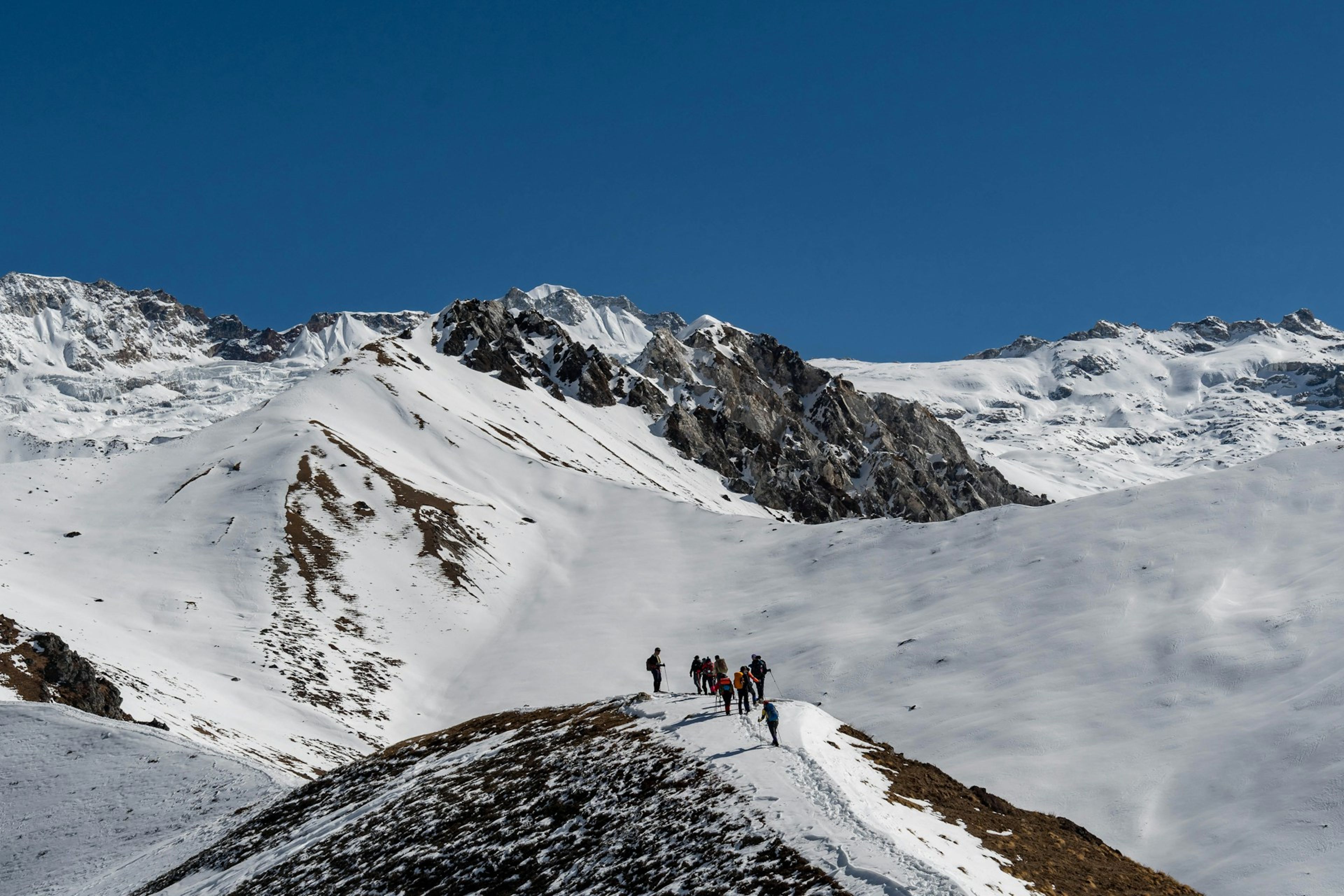
This is about as high as you can walk on the planet without ropes, crampons, or climbing skills. Over twenty-one days, this expedition-style journey takes you from Kathmandu across Tibet to the north side of Everest, and then on foot up the East Rongbuk Glacier to Advanced Base Camp at 6,340 metres — the closest a non-climber can get to the summit of the highest mountain on earth.
The adventure opens with a scenic flight from Kathmandu to Lhasa, where three nights in the old city allow time to acclimatise and explore the Potala Palace, the Jokhang Temple, and the Barkhor. From there the route runs along the Friendship Highway through Gyantse and Shigatse, past glittering lakes and high passes, with stops at monasteries that bring the region’s Buddhist culture to life.
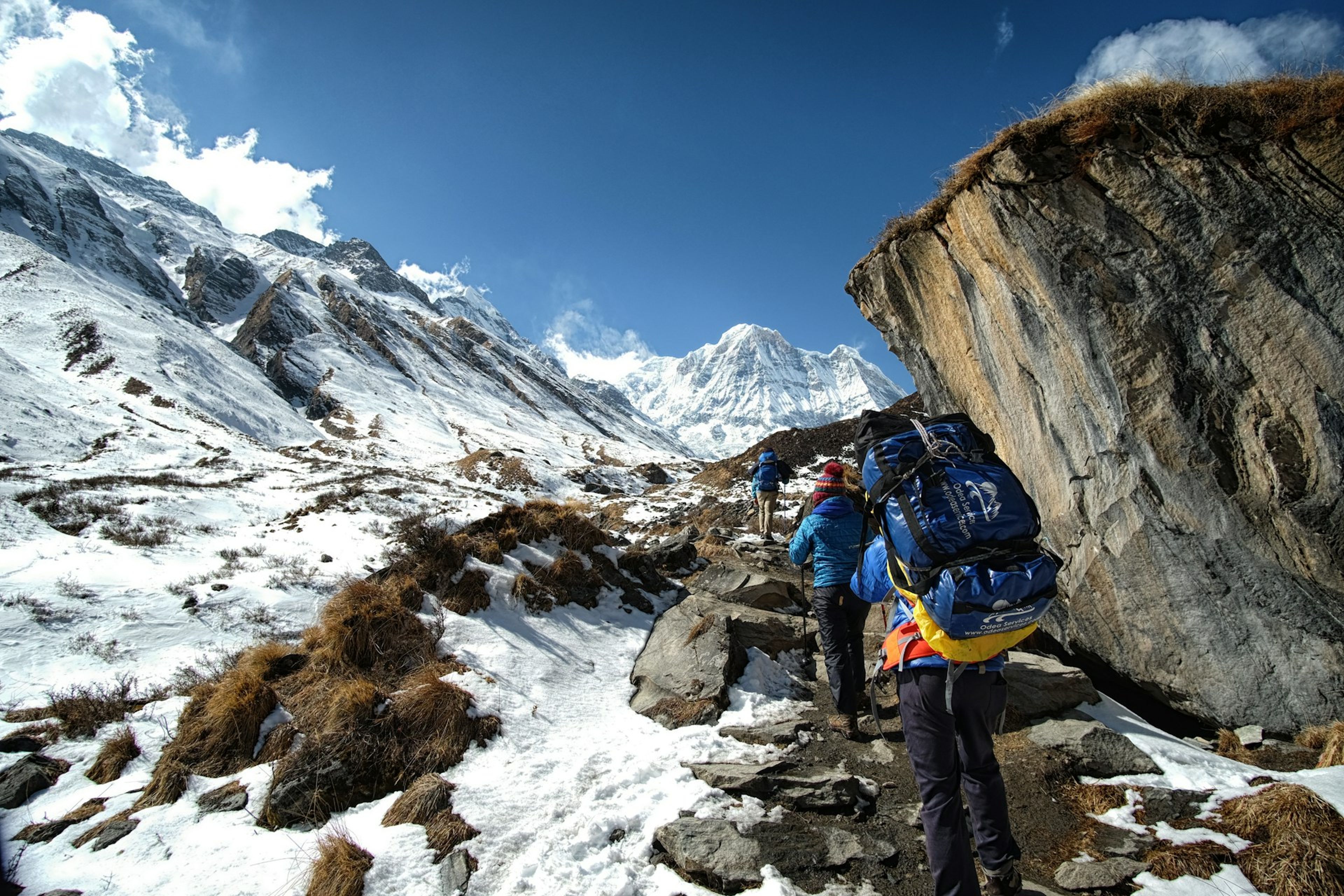
Beyond Shegar you reach Rongbuk Monastery and Everest Base Camp on the Tibetan side, with the sheer north face filling the sky. After resting to acclimatise, you trek up the East Rongbuk Glacier — a frozen world of ice seracs and moraine — through Interim Camp and Camp 2 to Advanced Base Camp, the historic launching point for north-side ascents of Everest.
This is a serious, high-altitude undertaking that rewards patience and fitness with views few people ever see. The return descends to Base Camp and crosses back to Nepal over the Friendship Bridge, ending where the journey began in Kathmandu.
April to July, August to October is the main recommended window for this itinerary. Exact conditions can vary by region, altitude, road access, flight reliability, and the kind of views or activities you want most.
Tibet Advanced Everest Base Camp Trek is rated Challenging. This reflects the route pace, terrain, altitude profile, daily movement, and the amount of preparation most travelers should expect. The final fit still depends on your experience, travel month, health, and preferred comfort level.
Trust and review proof
The page is kept practical: visible pricing notes, availability checks, permit questions, and review proof are tied to the actual trip details.
| Booking point | Current status | What to confirm |
|---|---|---|
| Published package price | Custom quote after dates | Use this as the starting point, not the final private-trip invoice. |
| Private departure | Quoted after dates | Guide, vehicle, hotel, permit, and rooming choices can change the final price. |
| Group joining or fixed departure | Checked on request | Only confirmed when the route, start date, seats, and operating minimums line up. |
| Deposit and balance | Confirmed before booking | Payment schedule, cancellation terms, and permit or flight constraints are checked before booking. |
Compare more trekking options, durations, routes, and planning styles.
Check visas, packing, insurance, payment, safety, and practical pre-trip questions.
Everest Base Camp Trek 2026: Explore the 14-day itinerary, permits, costs from $1,200, difficulty, best season, and what Base Camp actually looks l...
Know the Everest Base Camp trek itinerary for 2026. Compare 12, 14, and 17-day routes, acclimatization, altitude, and choose the right EBC trek.
Compare Everest Base Camp trek seasons by visibility, temperature, Lukla flight reliability, trail traffic, and high-altitude comfort.
Understand Everest Base Camp trek difficulty by altitude, walking hours, training, teahouse comfort, and the demanding upper Khumbu days.
You’re met at Tribhuvan International Airport and transferred to your hotel in a private vehicle. The rest of the day is free to rest and recover from travelling before the journey ahead.
-
1,400 m / 4,593 ft
No meals
Hotel in Kathmandu
You’re met at Tribhuvan International Airport and transferred to your hotel in a private vehicle. The rest of the day is free to rest and recover from travelling before the journey ahead.
Duration
-
Elevation
1,400 m / 4,593 ft
Meals
No meals
Stay
Hotel in Kathmandu
After breakfast we hold a briefing to introduce your trek leader and run through the trip — bring your passport, passport photos, and a copy of your travel insurance. Then we head out to see the valley: Boudhanath, one of the world’s largest Buddhist stupas; Pashupatinath, the famous Shiva temple on the Bagmati River; and Bhaktapur Durbar Square, a cluster of pagoda and shikhara temples around the Palace of 55 Windows. The rest of the day is free for last-minute shopping in Thamel, and your Tibet permit and visa are handed over in the evening.
-
1,400 m / 4,593 ft
Breakfast
Hotel in Kathmandu
After breakfast we hold a briefing to introduce your trek leader and run through the trip — bring your passport, passport photos, and a copy of your travel insurance. Then we head out to see the valley: Boudhanath, one of the world’s largest Buddhist stupas; Pashupatinath, the famous Shiva temple on the Bagmati River; and Bhaktapur Durbar Square, a cluster of pagoda and shikhara temples around the Palace of 55 Windows. The rest of the day is free for last-minute shopping in Thamel, and your Tibet permit and visa are handed over in the evening.
Duration
-
Elevation
1,400 m / 4,593 ft
Meals
Breakfast
Stay
Hotel in Kathmandu
The flight to Lhasa is one of the most beautiful air routes anywhere, with sweeping views of Everest, Kangchenjunga, and the rest of the Himalaya. You’re met by your Tibetan guide on arrival and driven into the city, about 1.5 hours away. Take it easy for the remainder of the day to adjust to Lhasa’s altitude.
-
3,660 m / 12,008 ft
Breakfast
Hotel in Lhasa
The flight to Lhasa is one of the most beautiful air routes anywhere, with sweeping views of Everest, Kangchenjunga, and the rest of the Himalaya. You’re met by your Tibetan guide on arrival and driven into the city, about 1.5 hours away. Take it easy for the remainder of the day to adjust to Lhasa’s altitude.
Duration
-
Elevation
3,660 m / 12,008 ft
Meals
Breakfast
Stay
Hotel in Lhasa
The day begins at Sera Monastery, with its whitewashed walls and golden roofs, followed by the gardens of the Norbulingka, the Dalai Lama’s former summer residence. We also visit the Jokhang Temple and the bustling Barkhor, where vendors sell thangkas, masks, prayer beads, and all manner of Tibetan crafts.
-
3,650 m / 11,975 ft
Breakfast
Hotel in Lhasa
The day begins at Sera Monastery, with its whitewashed walls and golden roofs, followed by the gardens of the Norbulingka, the Dalai Lama’s former summer residence. We also visit the Jokhang Temple and the bustling Barkhor, where vendors sell thangkas, masks, prayer beads, and all manner of Tibetan crafts.
Duration
-
Elevation
3,650 m / 11,975 ft
Meals
Breakfast
Stay
Hotel in Lhasa
The highlight today is the Potala Palace, a UNESCO World Heritage site famous for its Buddhist treasures and the bejewelled tombs of past Dalai Lamas. We then visit Drepung Monastery, once home to over 10,000 monks and a great seat of learning, before finishing at the Tibet Museum, with its rich collection of relics, statues, thangkas, and scriptures.
-
3,650 m / 11,975 ft
Breakfast
Hotel in Lhasa
The highlight today is the Potala Palace, a UNESCO World Heritage site famous for its Buddhist treasures and the bejewelled tombs of past Dalai Lamas. We then visit Drepung Monastery, once home to over 10,000 monks and a great seat of learning, before finishing at the Tibet Museum, with its rich collection of relics, statues, thangkas, and scriptures.
Duration
-
Elevation
3,650 m / 11,975 ft
Meals
Breakfast
Stay
Hotel in Lhasa
We travel the Friendship Highway over the Khamba La (4,794 m), with views of the deep-blue Yamdrok Tso lake and the Nazin Kang Sang glacier, then cross the Karo La at 5,045 m. After 261 kilometres the road reaches Gyantse, a traditional Tibetan town of stone farmhouses.
261 km drive
3,950 m / 12,959 ft
Breakfast
Hotel in Gyantse
We travel the Friendship Highway over the Khamba La (4,794 m), with views of the deep-blue Yamdrok Tso lake and the Nazin Kang Sang glacier, then cross the Karo La at 5,045 m. After 261 kilometres the road reaches Gyantse, a traditional Tibetan town of stone farmhouses.
Duration
261 km drive
Elevation
3,950 m / 12,959 ft
Meals
Breakfast
Stay
Hotel in Gyantse
Gyantse’s highlights are the 14th-century Dzong fort and the Kumbum, a tiered stupa topped with a golden dome and filled with Tibetan Buddhist murals. We then drive 90 kilometres to Shigatse, stopping at Shalu Monastery along the way. Shigatse, Tibet’s second city, is home to Tashilhunpo, one of the largest working monasteries in Tibet.
90 km drive
3,900 m / 12,795 ft
Breakfast
Hotel in Shigatse
Gyantse’s highlights are the 14th-century Dzong fort and the Kumbum, a tiered stupa topped with a golden dome and filled with Tibetan Buddhist murals. We then drive 90 kilometres to Shigatse, stopping at Shalu Monastery along the way. Shigatse, Tibet’s second city, is home to Tashilhunpo, one of the largest working monasteries in Tibet.
Duration
90 km drive
Elevation
3,900 m / 12,795 ft
Meals
Breakfast
Stay
Hotel in Shigatse
The drive to Shegar runs through striking high country, passing Lhatse and the Gyamtso La at 5,220 metres. There’s a chance to see Natang Monastery and Sakya Monastery, which holds an enormous library and a book written entirely in gold. As the land opens into vast plains, distant monasteries and nomad camps come into view.
244 km drive
4,050 m / 13,287 ft
Breakfast
Guesthouse in Shegar
The drive to Shegar runs through striking high country, passing Lhatse and the Gyamtso La at 5,220 metres. There’s a chance to see Natang Monastery and Sakya Monastery, which holds an enormous library and a book written entirely in gold. As the land opens into vast plains, distant monasteries and nomad camps come into view.
Duration
244 km drive
Elevation
4,050 m / 13,287 ft
Meals
Breakfast
Stay
Guesthouse in Shegar
From Shegar we cross the Pang La at 5,150 metres, leaving the highway for rougher roads with views of Makalu and Shishapangma. After around 85 kilometres we reach Rongbuk, where Everest comes into full view, and continue by jeep to Base Camp. We also visit Rongbuk Monastery, a pilgrimage site founded in 1902, and walk the old paths lined with carved prayer stones.
76 km drive
5,150 m / 16,896 ft
Breakfast, lunch & dinner
Tented camp
From Shegar we cross the Pang La at 5,150 metres, leaving the highway for rougher roads with views of Makalu and Shishapangma. After around 85 kilometres we reach Rongbuk, where Everest comes into full view, and continue by jeep to Base Camp. We also visit Rongbuk Monastery, a pilgrimage site founded in 1902, and walk the old paths lined with carved prayer stones.
Duration
76 km drive
Elevation
5,150 m / 16,896 ft
Meals
Breakfast, lunch & dinner
Stay
Tented camp
We spend several days here to acclimatise properly before trekking higher — essential preparation for the altitude to come. There are short day walks to fill the time, but the real luxury is simply sitting, reading, and dining with the sheer north face of the highest mountain on earth towering overhead.
-
5,150 m / 16,896 ft
Breakfast, lunch & dinner
Tented camp
We spend several days here to acclimatise properly before trekking higher — essential preparation for the altitude to come. There are short day walks to fill the time, but the real luxury is simply sitting, reading, and dining with the sheer north face of the highest mountain on earth towering overhead.
Duration
-
Elevation
5,150 m / 16,896 ft
Meals
Breakfast, lunch & dinner
Stay
Tented camp
We set off up a dusty ablation valley with views of Pumori, Lingtren, and Nuptse, then branch up the East Rongbuk valley. The trail climbs over moraine rubble, and the first ice seracs rise like white sails from the dark, debris-laden surface of the glacier.
6 - 8 hours trek
5,760 m / 18,898 ft
Breakfast, lunch & dinner
Tented camp
We set off up a dusty ablation valley with views of Pumori, Lingtren, and Nuptse, then branch up the East Rongbuk valley. The trail climbs over moraine rubble, and the first ice seracs rise like white sails from the dark, debris-laden surface of the glacier.
Duration
6 - 8 hours trek
Elevation
5,760 m / 18,898 ft
Meals
Breakfast, lunch & dinner
Stay
Tented camp
About two hours above Interim Camp, the central ridgeline leads into a maze of ice at the confluence with the Changtse Glacier. Camp 2 sits just beyond, in a beautiful spot where glaciers spill into the valley from every direction and the gravel “highway” threads through the ice formations.
5 - 7 hours trek
5,970 m / 19,587 ft
Breakfast, lunch & dinner
Tented camp
About two hours above Interim Camp, the central ridgeline leads into a maze of ice at the confluence with the Changtse Glacier. Camp 2 sits just beyond, in a beautiful spot where glaciers spill into the valley from every direction and the gravel “highway” threads through the ice formations.
Duration
5 - 7 hours trek
Elevation
5,970 m / 19,587 ft
Meals
Breakfast, lunch & dinner
Stay
Tented camp
The Rongbuk Glacier is a frozen ocean of ice, with some of the most dramatic mountain views in Tibet. We follow the central moraine — the route expeditions use to begin their Everest climbs — past Changtse Base Camp and Lhakpa Ri Base Camp before reaching Advanced Base Camp, the old “Camp 3”. This final section is always tough going at altitude.
6 - 8 hours trek
6,340 m / 20,795 ft
Breakfast, lunch & dinner
Tented camp
The Rongbuk Glacier is a frozen ocean of ice, with some of the most dramatic mountain views in Tibet. We follow the central moraine — the route expeditions use to begin their Everest climbs — past Changtse Base Camp and Lhakpa Ri Base Camp before reaching Advanced Base Camp, the old “Camp 3”. This final section is always tough going at altitude.
Duration
6 - 8 hours trek
Elevation
6,340 m / 20,795 ft
Meals
Breakfast, lunch & dinner
Stay
Tented camp
A spare day to soak up the expedition atmosphere at Advanced Base Camp, the staging point for the North Col route. The summit of Everest looks impossibly close from here — little more than 2,400 metres above — and this is as near to the top as any non-climber can stand.
-
6,340 m / 20,795 ft
Breakfast, lunch & dinner
Tented camp
A spare day to soak up the expedition atmosphere at Advanced Base Camp, the staging point for the North Col route. The summit of Everest looks impossibly close from here — little more than 2,400 metres above — and this is as near to the top as any non-climber can stand.
Duration
-
Elevation
6,340 m / 20,795 ft
Meals
Breakfast, lunch & dinner
Stay
Tented camp
A long downhill day back to Base Camp, completed in one push. Starting from Camp 2 makes for a more enjoyable descent, with a chance to finally lift your eyes off your boots and take in the surroundings as the altitude eases.
7 - 9 hours trek
5,150 m / 16,896 ft
Breakfast, lunch & dinner
Tented camp
A long downhill day back to Base Camp, completed in one push. Starting from Camp 2 makes for a more enjoyable descent, with a chance to finally lift your eyes off your boots and take in the surroundings as the altitude eases.
Duration
7 - 9 hours trek
Elevation
5,150 m / 16,896 ft
Meals
Breakfast, lunch & dinner
Stay
Tented camp
At first light we watch the sunrise on Everest’s north face — a truly awe-inspiring sight — before driving on toward the border. The route crosses the Lalung La and Shung La passes, with views of Shishapangma, Cho Oyu, Menlungtse, and Gauri Shankar, then descends from the dry plateau into the green, fertile hills around Zhangmu near the Nepali border.
-
2,400 m / 7,874 ft
Breakfast
Guesthouse in Zhangmu
At first light we watch the sunrise on Everest’s north face — a truly awe-inspiring sight — before driving on toward the border. The route crosses the Lalung La and Shung La passes, with views of Shishapangma, Cho Oyu, Menlungtse, and Gauri Shankar, then descends from the dry plateau into the green, fertile hills around Zhangmu near the Nepali border.
Duration
-
Elevation
2,400 m / 7,874 ft
Meals
Breakfast
Stay
Guesthouse in Zhangmu
A short drive brings us to the Friendship Bridge over the Bhote Koshi River, where we cross into Nepal at Kodari and part ways with the Tibetan crew. After about four hours driving through deep valleys, we arrive back in Kathmandu.
-
1,400 m / 4,593 ft
Breakfast
Hotel in Kathmandu
A short drive brings us to the Friendship Bridge over the Bhote Koshi River, where we cross into Nepal at Kodari and part ways with the Tibetan crew. After about four hours driving through deep valleys, we arrive back in Kathmandu.
Duration
-
Elevation
1,400 m / 4,593 ft
Meals
Breakfast
Stay
Hotel in Kathmandu
A free day in Kathmandu — a good chance to add on a jungle safari, rafting trip, or scenic Everest flight if you’d like. In the evening we gather for a farewell dinner at a traditional Nepali restaurant with cultural performances.
-
1,400 m / 4,593 ft
Breakfast & farewell dinner
Hotel in Kathmandu
A free day in Kathmandu — a good chance to add on a jungle safari, rafting trip, or scenic Everest flight if you’d like. In the evening we gather for a farewell dinner at a traditional Nepali restaurant with cultural performances.
Duration
-
Elevation
1,400 m / 4,593 ft
Meals
Breakfast & farewell dinner
Stay
Hotel in Kathmandu
The trip comes to an end. You’ll be transferred to Kathmandu’s international airport in good time for your departure flight.
-
-
Breakfast
—
The trip comes to an end. You’ll be transferred to Kathmandu’s international airport in good time for your departure flight.
Duration
-
Elevation
-
Meals
Breakfast
Stay
—
| Extra cost or condition | How to handle it |
|---|---|
| International flights and airport departure taxes | Budget separately unless your final written proposal includes it. |
| Travel insurance with high-altitude emergency evacuation coverage | Budget separately unless your final written proposal includes it. |
| Nepal entry visa (available on arrival at Kathmandu airport) | Budget separately unless your final written proposal includes it. |
| Internet and telephone calls | Budget separately unless your final written proposal includes it. |
| Lunches and dinners in Kathmandu and during the Tibet tour (roughly USD 15–20 per person per day) | Budget separately unless your final written proposal includes it. |
| Personal expenses such as alcohol, soft drinks, and laundry | Budget separately unless your final written proposal includes it. |
| Personal clothing and trekking equipment | Budget separately unless your final written proposal includes it. |
| Tips for guides, porters, and drivers | Budget separately unless your final written proposal includes it. |
Tibet Advanced Everest Base Camp Trek is best suited for first-time trekkers, experienced hikers, and travelers who want a paced Himalayan walking journey. We recommend checking the duration, difficulty, season, and included support before booking.
The main planning points are difficulty, altitude profile, acclimatisation, permits, guide support, and daily walking time. Our team can confirm what is realistic for your dates and group size.
Yes. We can customize Tibet Advanced Everest Base Camp Trek around your dates, preferred pace, accommodation style, private transport, guide support, and add-on experiences.
Everest Base Camp Trek 2026: Explore the 14-day itinerary, permits, costs from $1,200, difficulty, best season, and what Base Camp actually looks l...
Know the Everest Base Camp trek itinerary for 2026. Compare 12, 14, and 17-day routes, acclimatization, altitude, and choose the right EBC trek.
Compare Everest Base Camp trek seasons by visibility, temperature, Lukla flight reliability, trail traffic, and high-altitude comfort.
Understand Everest Base Camp trek difficulty by altitude, walking hours, training, teahouse comfort, and the demanding upper Khumbu days.
Pack for Everest Base Camp with route-specific layering, footwear, documents, charging, cold mornings, and upper Khumbu essentials.
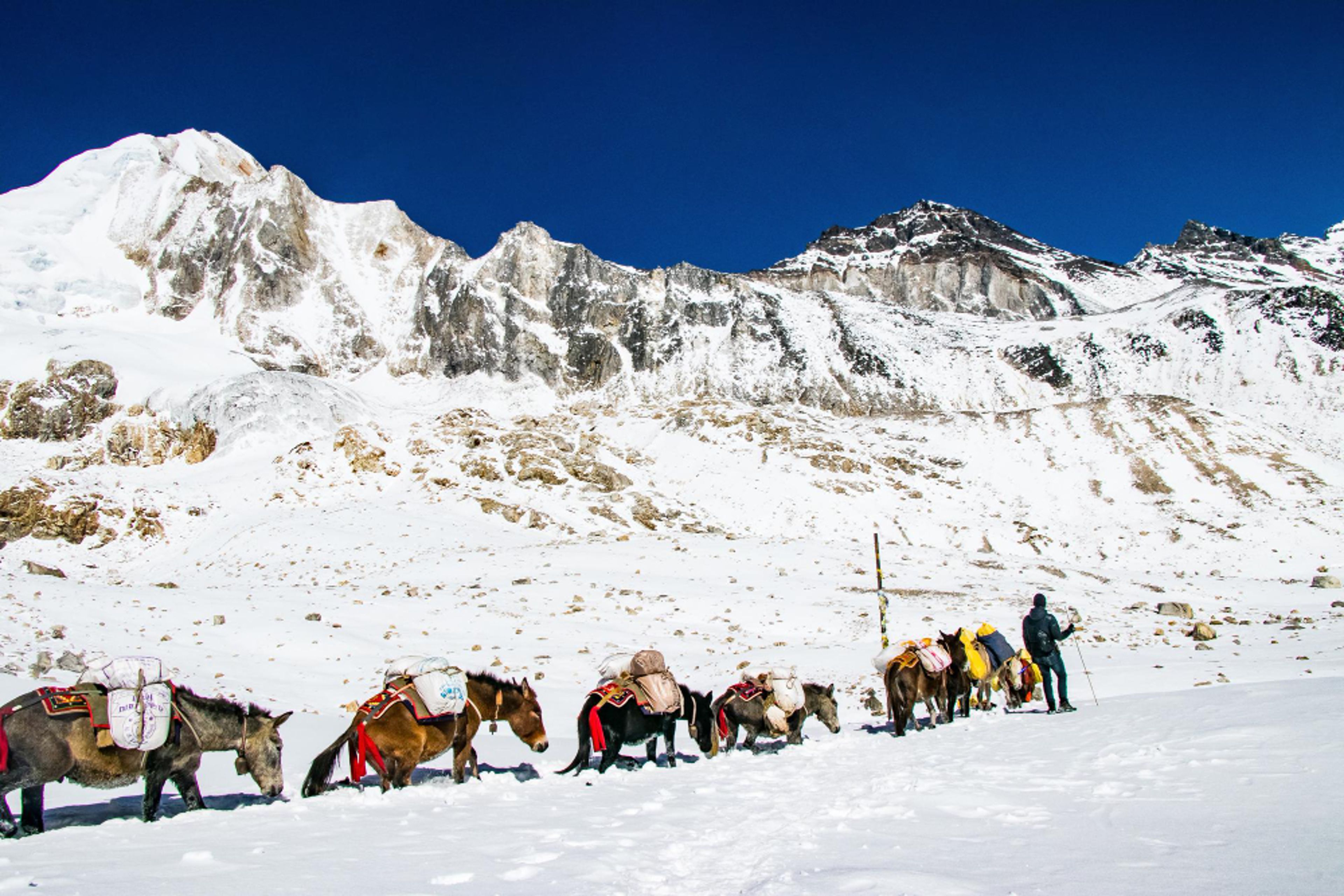
The Manaslu Circuit Trek is a 14–18 day restricted-area trekking route in Gorkha District, Nepal, circling Mount Manaslu, the world's eighth-highest peak at 8,163m. The route follows the Budhi Gandaki valley, crosses Larkya La Pass at 5,167m, and exits via Dharapani into the Annapurna Conservation Area.
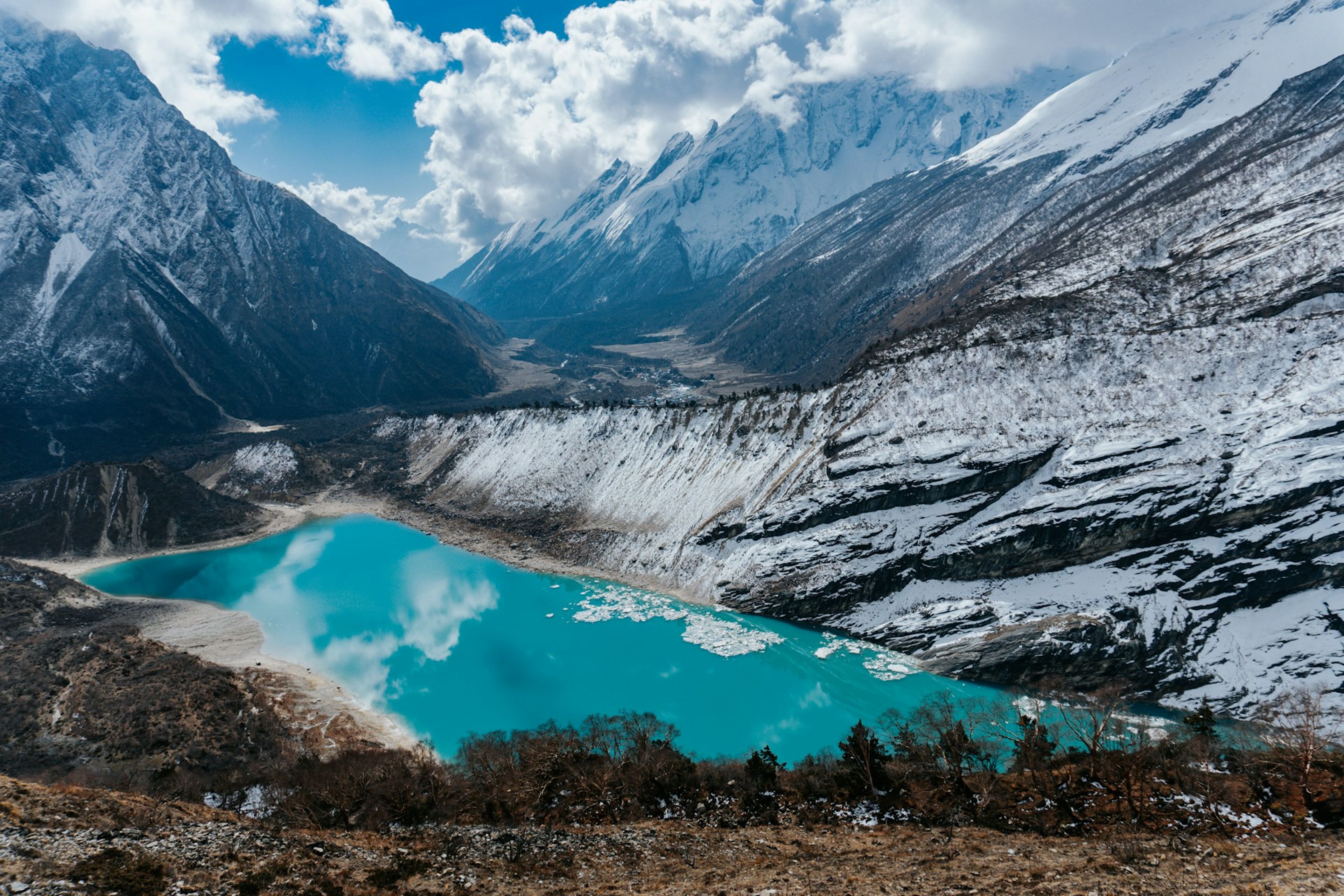
Plan your Manaslu Circuit Trek with this insider guide. Covers the 14-16 day itinerary, restricted area permit, Larkya La Pass, difficulty, cost, and why it rivals the Annapurna Circuit.
The Manaslu Circuit Trek requires four permits in 2026 — a Restricted Area Permit (RAP), Manaslu Conservation Area Permit (MCAP), Annapurna Conservation Area Permit (ACAP), and a Chumnubri Rural Municipality fee. Total permit cost runs $215–$225 per person in autumn. As of 22 March 2026, solo trekkers can now obtain the RAP through a registered agency — but a licensed guide remains mandatory.
A clear 2026 safety guide for visitors to Nepal, including trekking, transport, scams, women travelers, and notes for American, British, Korean, and Japanese tourists.
Enquire Now
Trusted By