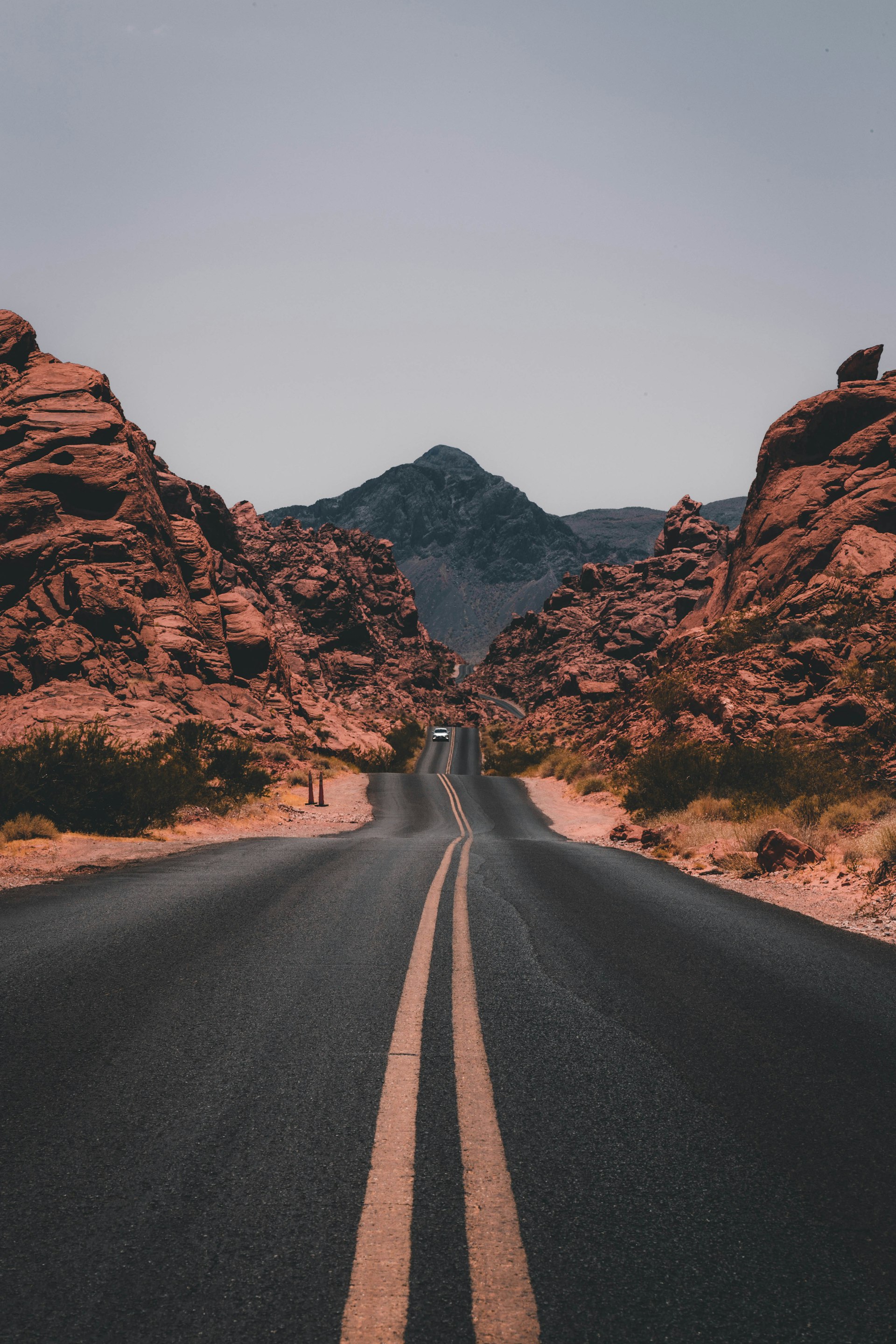
Everest Photography Helicopter Tour Guide
An Everest photography helicopter tour should be planned around light, visibility, seating, lens access, altitude stops, and weather patience rather than only the destination name.
Everest Photography Helicopter Tour planning reality
- Early mountain light
- Aerial viewpoint planning
- Camera-bag limits
- Weather backup day
Who should choose this
- Choose helicopter routing when the traveler values time, access, comfort, or a non-trekking mountain experience.
- Keep altitude exposure, weather movement, and landing rules visible from the start.
- Use trekking instead when the main goal is the trail journey rather than aerial access.
Best planning window
- Morning flights usually give the strongest visibility and calmer wind.
- Spring and autumn are the easiest broad windows for Himalayan flight planning.
- Winter can be clear but colder, while monsoon needs more flexibility around cloud and rain.
Logistics and safety judgment
- Confirm current weather, aircraft availability, landing permissions, and passenger-weight limits close to departure.
- Build a backup window if the flight is a major trip highlight.
- Treat altitude stops as short exposure windows, not casual sightseeing time.
Expert planning note
Use this guide with
Compare Everest Photography Tour
Review the itinerary, inclusions, cost notes, and booking options for the closest matching package.
Best Time for Everest Base Camp Helicopter Tour
Continue into the next planning question in this topic cluster.
Everest Region destination guide
Check destination details, route context, and nearby trip options.
Nepal travel FAQ
Verify practical details around visas, safety, packing, payment, and trip preparation.
Related packages
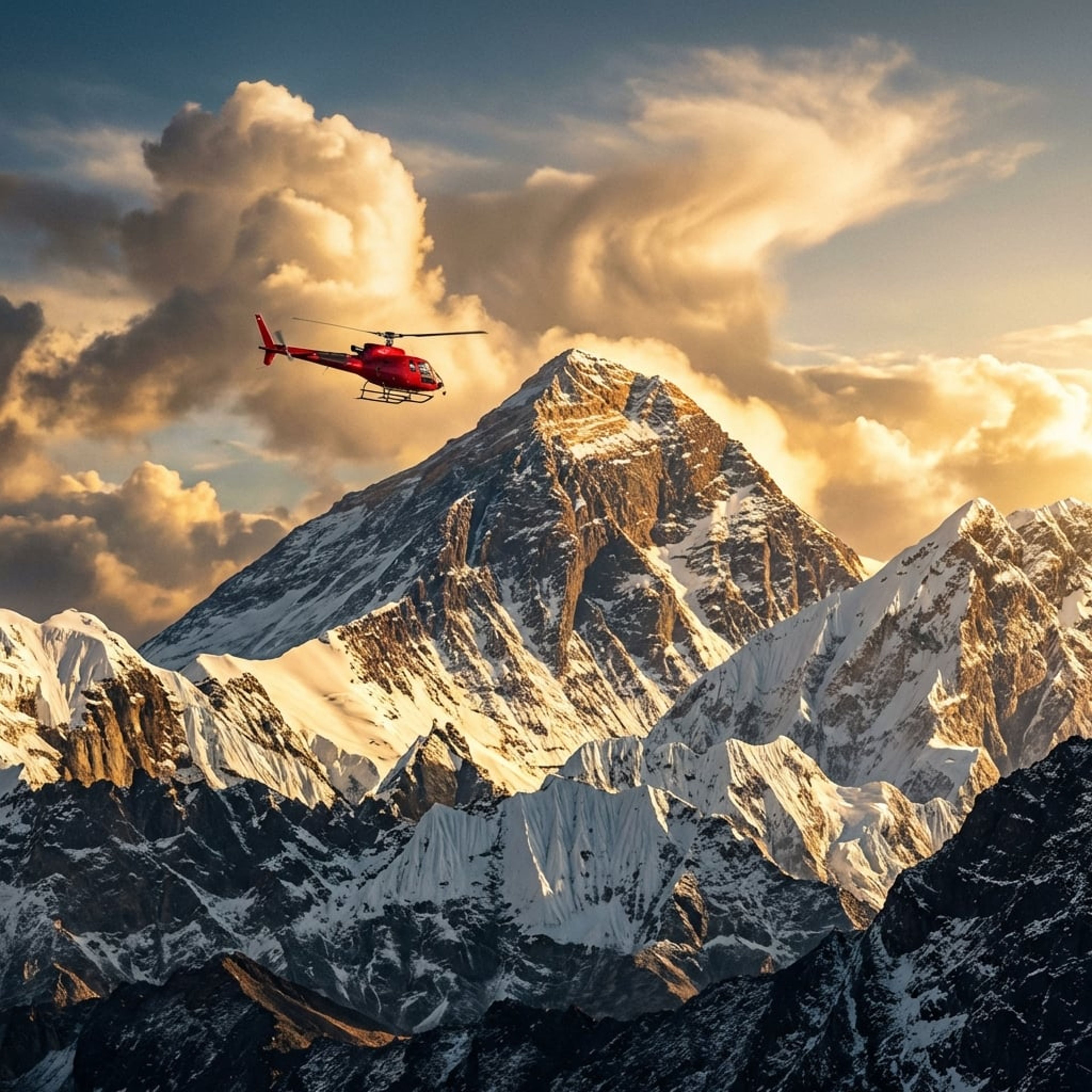
Everest Photography Tour
Premium 5-hour photography expedition to Everest with extended ground time at Kala Patthar and Base Camp. Maximum 2 passengers for optimal shooting.
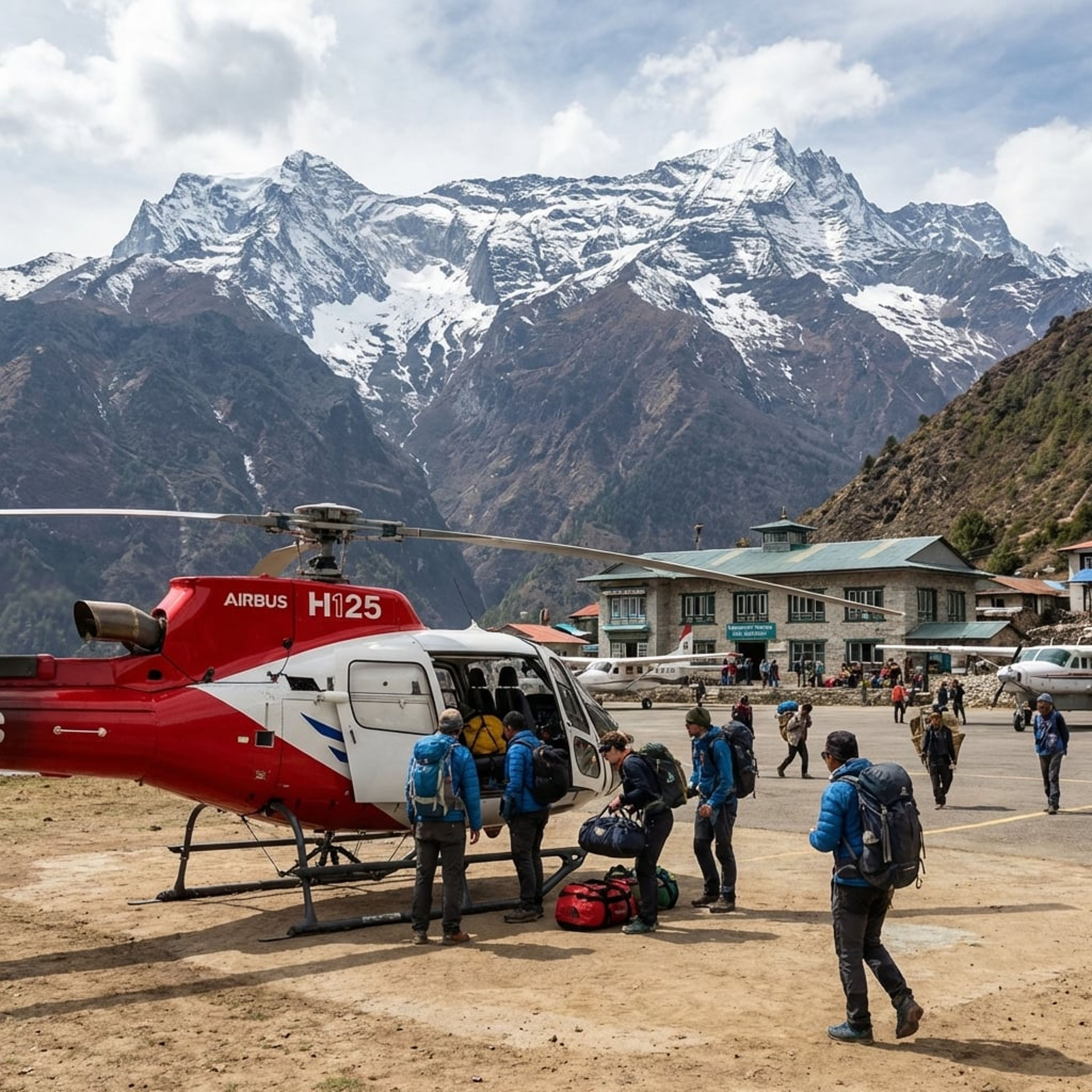
Everest Base Camp Helicopter Tour
Fly directly to Kala Patthar (5,545m) for breathtaking 360-degree views of Everest, Lhotse, Nuptse, and the Khumbu Glacier. Includes breakfast at the world's highest-situated luxury hotel.
Luxury Helicopter Tour in Nepal
Ultimate full-day luxury tour covering Everest, Chitwan National Park, and Pokhara. Views of 27+ Himalayan peaks with multiple landings.
Frequently asked questions
How many days should I plan for an Everest photography helicopter tour?
Plan one flight day plus a backup if the images are important.
What is the best time for an Everest photography helicopter tour?
Autumn, winter, and spring can all work, with clear mornings preferred.
Is altitude a concern for an Everest photography helicopter tour?
Yes. Any high viewpoint stop should be brief, controlled, and guided by crew instructions.
What should I confirm with the helicopter operator?
Confirm seating, window visibility, camera-bag limits, stop expectations, weather backup, and drone rules.
Sources and official references
We use official and primary sources where possible. Travel rules, access, and operating conditions can change, so confirm requirements before departure.
Civil Aviation Authority of Nepal
Official civil aviation authority source for Nepal aviation oversight and airport information.
Last checked May 6, 2026
CAAN airport profiles
Civil aviation authority reference for Nepal airport profiles, including mountain airports.
Last checked May 6, 2026
CAAN Tenzing-Hillary Airport profile
Civil aviation authority airport profile for Tenzing-Hillary Airport in Lukla.
Last checked May 6, 2026
Nepal Tourism Board Sagarmatha National Park guide
Official tourism-board reference for Sagarmatha National Park and Everest-region visitor context.
Last checked May 6, 2026